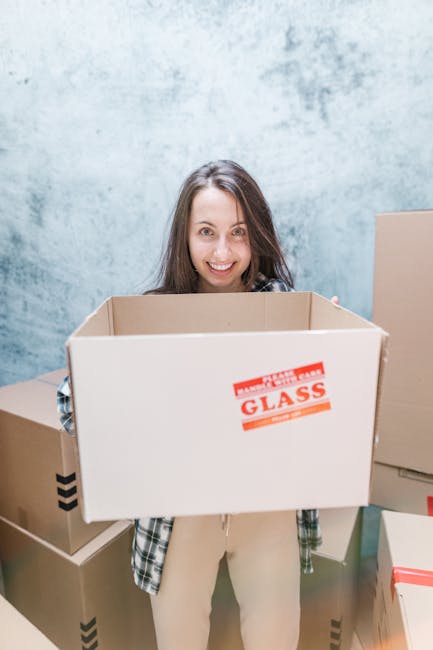
Complete guide to packing fragile items for international removals
Fragile packing for an overseas move is one of those jobs that looks simple right up until you start stacking boxes on the floor and realise how much can go wrong. A chipped glass, a cracked frame, a smashed plate from your grandmother's set - it only takes one badly packed item to spoil an otherwise well-planned move. This complete guide to packing fragile items for international removals breaks the process down into calm, practical steps so you can protect what matters and avoid those expensive little disasters that always seem to happen at the worst time.
Whether you are moving a family home, a single flat, or a business shipment with sensitive equipment, the same rule applies: fragile items need proper materials, proper cushioning, and proper loading. Not just "a bit of bubble wrap and hope". In this article you will learn how international packing works, what to pack yourself, when to call in help, and how to reduce risk from the UK to destination day. A lot of it is common sense, to be fair, but the devil is in the details.
For broader moving support, some readers also find it useful to look at packing and unpacking services, especially if the move involves a large volume of breakables or you are short on time.
Table of Contents
- Why fragile packing matters for international removals
- How fragile packing works
- Key benefits and practical advantages
- Who this is for and when it makes sense
- Step-by-step guidance
- Expert tips for better results
- Common mistakes to avoid
- Tools, resources and recommendations
- Law, compliance, standards and best practice
- Options and methods compared
- Case study or real-world example
- Practical checklist
- Conclusion
- Frequently asked questions
Why Complete guide to packing fragile items for international removals Matters
International removals are tougher on fragile goods than local moves. Boxes may be handled several times, shifted between depots, stacked in a container or vehicle, and exposed to vibration, pressure, humidity, and temperature changes. A box that feels "fine" on a short drive across town can be a problem once it has been lifted, transferred, and travelled for days.
That is why packing is not just about wrapping items. It is about creating a protected environment inside the box. Think of the outer carton as the shell and the internal cushioning as the shock absorber. If either one fails, breakage risk goes up quickly. And unlike a domestic move, a replacement or repair may be awkward or impossible if the item is sentimental, custom-made, or discontinued.
For anyone planning a broader house move, it also helps to understand how fragile packing fits into the wider removal process. Services like home moves and house removals often involve the same packing principles, even when the route is shorter. The basics stay the same: protect, separate, label, and stabilise.
Expert summary: fragile items survive international removals best when they are packed for movement, not just storage. Every gap, loose edge, and weak box increases the chance of damage.
How Complete guide to packing fragile items for international removals Works
The process is straightforward in theory, but it needs discipline. First, sort items by fragility and shape. Then choose the right materials. Then wrap, cushion, and box each item so it cannot touch hard surfaces or other items during transit. Finally, label the cartons clearly and load them in the safest order.
A good international packing routine usually follows these stages:
- Assess the item - Is it glass, ceramic, electronics, artwork, stone, or something oddly shaped?
- Choose the container - Standard boxes work for lighter breakables; double-walled cartons or specialist boxes are better for delicate or heavier pieces.
- Create internal protection - Use paper, foam, bubble wrap, dividers, or custom inserts.
- Seal and stabilise - Make sure the item cannot shift inside the box when gently shaken.
- Label properly - Mark the box clearly on multiple sides so handlers know what is inside.
- Load with care - Keep fragile cartons upright and away from pressure points wherever possible.
Here is the part people often miss: the packing method should reflect the transport method. A box going into a road vehicle for a few hours is not the same as a box going through an international chain of loading, customs checks, and onward delivery. If your shipment is mixed with household goods, you may also want to speak to a removal company or compare removal companies that understand export packing standards and can advise on handling.
Key Benefits and Practical Advantages
Proper fragile packing does more than stop breakages. It saves time, reduces stress, and makes unloading far easier at the other end. If you have ever opened a box full of mixed crockery, shredded paper, and one unfortunate cracked mug, you will know how messy a bad packing job can become.
- Less breakage - Good cushioning absorbs shocks and keeps items separated.
- Faster unpacking - Clear labels and sensible grouping save time later.
- Lower replacement cost - You avoid unnecessary damage claims and surprise purchases.
- Better load stability - Well-packed cartons stack more safely.
- Less emotional strain - Sentimental items are protected, which matters more than people admit.
There is also a practical bonus: tidy, consistent packing helps movers, warehouse teams, and delivery crews handle boxes with more confidence. That matters if your move includes larger vehicle transfers, a moving van phase, or a longer haul where items are repeatedly moved between spaces.
Who This Is For and When It Makes Sense
This guide is for anyone moving fragile possessions internationally, but some groups will feel the impact more than others.
- Families moving house with crockery, mirrors, kitchenware, ornaments, and framed photos.
- Collectors with glassware, ceramics, vinyl, artworks, models, or decorative objects.
- Remote workers and businesses moving monitors, printers, projectors, and office equipment.
- Students and renters who are taking smaller but still valuable belongings abroad.
- Homeowners downsizing who want to keep treasured items safe while reducing volume.
It also makes sense if the route is complex. For example, if you are moving overseas but first need local collection, storage, or intermediate transport, the same packing standards still apply. In those situations, many people use a combination of services such as removals, removals van, or even man with van support for the first leg. The key is not the vehicle name - it is how the fragile goods are prepared before they ever leave the house.
Truth be told, if the item would make you wince just by dropping it onto a carpet, it deserves extra care.
Step-by-Step Guidance
1. Sort your fragile items before you pack anything
Lay everything out and group items by type and sensitivity. Glasses with glasses. Plates with plates. Lampshades away from heavy decor. Don't mix a heavy stone ornament with a delicate ceramic bowl and expect the box to behave. It won't.
This is also the moment to decide what should be packed professionally and what you can reasonably handle yourself. Oversized mirrors, antiques, artwork, and delicate electronics often justify a higher-protection approach.
2. Use the right materials, not just any cardboard box
For international removals, materials matter more than people think. A strong box is the start, not the solution.
- Double-walled cartons for heavier or more vulnerable items
- Packing paper for wrapping and filling voids
- Bubble wrap for impact protection around individual pieces
- Foam sheets or pouches for screens, frames, and electronics
- Partition inserts for glasses and bottles
- Strong tape to seal seams and reinforce corners
- Marker pens and labels for clear identification
If you are arranging a larger home or business move, a team offering movers or office removals may be able to supply suitable packing materials or advise on carton types. That can save a lot of trial and error, and honestly, trial and error is not ideal with your best wine glasses.
3. Wrap each item individually
Never pack breakables loose. Each piece should be wrapped on its own, with extra attention to handles, corners, rims, and protruding parts. For plates, wrap them flat and stack vertically if the carton design supports it. For glasses and cups, use paper first and then a second protective layer if needed.
A useful habit is to pause after wrapping and ask: if this box were tipped slightly, would the item move? If the answer is yes, add more cushioning.
4. Cushion the bottom and create a soft interior
Start with a thick cushioning layer at the base of the box. Then place heavier items lower down and lighter ones above them only if it genuinely makes sense for the shape. Fill gaps around the sides with paper, foam, or soft wrap so the contents cannot settle during transit.
Small gaps are sneaky. They seem harmless until the box gets jolted and everything shifts half an inch. That half inch can be enough.
5. Keep weight manageable
One of the easiest mistakes is overfilling fragile boxes. A box can be strong and still be too heavy to handle safely. International removals involve lifting, stacking, and carrying over thresholds, up ramps, and around corners. A too-heavy carton is awkward, more likely to be dropped, and harder to keep upright.
As a rough rule, pack heavy breakables in smaller boxes. A box that can be moved comfortably with two hands is usually a safer bet than a monster carton that looks impressive but behaves like a brick.
6. Seal, reinforce, and test the box
Use strong tape on all seams, and reinforce the base. A quick, gentle shake test can reveal whether the contents move. If you hear clinking or feel shifting, the box needs more internal fill.
Do not overdo the tape to the point of making the box impossible to open later. There is a balance here. Slightly annoying at packing time, much better at arrival.
7. Label clearly and consistently
Each box should be marked with the room, the contents, and a simple warning such as "Fragile", "This side up", or "Do not stack". Labels should appear on multiple sides, because not every box will be seen from the same angle at every stage of the move.
It also helps to keep a box list. Not glamorous, admittedly, but extremely useful when you are tired and trying to find the kettle on day one.
8. Load fragile cartons strategically
Boxes marked fragile should be kept upright and placed where they are least likely to be crushed. In mixed loads, fragile cartons are often safest above heavy items, never under them. Avoid putting them next to loose tools, sharp-edged furniture, or anything that can flex and knock into them.
If you are working with a removal team, make sure they know which boxes need special handling before loading starts. That small conversation matters more than a label alone.
Expert Tips for Better Results
- Use smaller boxes for fragile items whenever possible. Small boxes are easier to stabilise and less likely to be overpacked.
- Photograph valuable items before packing so you have a simple record of condition and item contents.
- Pack by fragility, not room if the item is particularly delicate. A glass vase does not care which room it came from.
- Double-box especially vulnerable pieces such as collectibles, artwork, or small electronics.
- Separate lids, bases, and accessories so they do not rub together.
- Avoid newspaper for delicate surfaces if ink transfer is a risk. Plain packing paper is cleaner.
- Leave no empty corners inside the box. Movement usually starts in the corners and edges.
- Plan for the unpacking order so the most needed items are easy to reach first.
One small real-world tip: when you are packing late in the evening and the room is full of half-sealed cartons, it is very easy to rush. Don't. Put the kettle on, take five minutes, and come back with a steadier head. You will pack better. Almost everyone does.
If you want help with the full move rather than just the fragile packing, consider reviewing the company's wider service information, including removal services and man and van removals, to see what level of support fits your move size and schedule.
Common Mistakes to Avoid
Most damage comes from a handful of predictable errors. The good news is that they are easy to avoid once you know them.
- Using weak or reused boxes that collapse under pressure or moisture.
- Packing items with empty space around them so they rattle during transit.
- Wrapping too loosely or using too little cushioning on corners and handles.
- Mixing heavy and delicate items in the same carton.
- Ignoring weight limits and creating boxes that are too bulky to carry safely.
- Failing to label clearly, which leads to careless stacking and rough handling.
- Leaving fragile items until the last minute and packing them in a rush.
- Assuming "fragile" labels alone are enough. They help, but they are not magic.
Another subtle mistake is underestimating climate and transit time. A move that crosses several borders may expose goods to longer periods in storage or waiting areas. If you are packing items that dislike moisture or pressure, give them extra protection, not less.
Tools, Resources and Recommendations
You do not need a warehouse full of specialist gear, but the right tools make the job much easier.
| Item | Best use | Why it helps |
|---|---|---|
| Double-walled boxes | Heavier fragile items | Offers better crush resistance |
| Packing paper | Wrapping crockery, glass, small decor | Cushions surfaces without leaving residue |
| Bubble wrap | Odd shapes, electronics, ornaments | Absorbs knocks and vibration |
| Partition inserts | Glasses and bottles | Stops items touching each other |
| Foam sheets | Artwork, screens, frames | Protects flat surfaces and corners |
| Strong packing tape | Sealing boxes | Prevents base failure and lifting damage |
| Labels and marker pens | Box identification | Makes handling and unpacking easier |
If you prefer not to source and manage materials yourself, many people choose a professional packing option as part of a wider move. That is especially common with family homes and mixed-content shipments where fragile goods are only one part of the inventory. If you are comparing support levels, pages such as house movers and house removalists can help you understand the kind of service structure typically available.
Law, Compliance, Standards, or Best Practice
For most private household moves, the main concern is not legal complexity but handling responsibility, insurance awareness, and sensible packaging practice. That said, it is wise to check a few things before the move begins.
- Insurance terms - confirm what level of cover applies to packing, loading, and transit, and whether self-packed items are treated differently.
- Item declarations - if you have valuable, antique, or highly delicate goods, declare them clearly where required by your mover or insurer.
- Weight and handling guidance - follow reasonable safe lifting practice and do not create unsafe cartons just to save space.
- Export and import restrictions - some fragile items may be affected by customs or destination rules, especially if they are made from restricted materials.
- Professional best practice - reputable removal teams generally aim for traceable packing, clear labelling, and consistent handling procedures.
If compliance is a concern, the safest approach is simple: ask questions early. A trustworthy mover will explain how fragile goods are handled, what documentation is needed, and where responsibility begins and ends. You can also review practical company policies such as insurance and safety and health and safety policy to understand the standards a provider says it follows.
For business customers, especially those moving instruments, display items, or sensitive equipment, the same principles apply but the tolerance for shortcuts is even lower. If the contents matter commercially, pack them as if you will need them to work the moment they arrive.
Options, Methods, or Comparison Table
There is no single best method for every fragile item. The right approach depends on size, value, and how vulnerable the item is to impact or vibration.
| Method | Best for | Pros | Limitations |
|---|---|---|---|
| Single wrapping + lined box | Light household breakables | Quick, economical, easy to unpack | Not enough for very fragile or valuable items |
| Double wrapping + reinforced carton | Glassware, ceramics, small decor | Good balance of protection and cost | Requires careful packing discipline |
| Double-boxing | Artwork, electronics, collectibles | Excellent impact protection | Takes more material and space |
| Custom or specialist packing | Antiques, large mirrors, sensitive equipment | Best protection and fit | Usually the most time-consuming option |
For most households, the middle ground works best: sensible wrapping, a strong carton, and no empty space inside. For highly valuable or awkward pieces, the extra effort of custom packing is usually worth it. The cheapest option is not always the cheapest in the end, if you know what I mean.
Case Study or Real-World Example
Here is a simple example from a typical international household move. A couple relocating from a London flat had a mixed set of fragile items: six wine glasses, a mirror, two framed prints, several mugs, and a decorative ceramic bowl that had been packed in its original box once, many years ago, and was still oddly important to them.
Instead of throwing everything into one large box, they separated the items into three groups. The wine glasses went into a partitioned carton with paper padding. The prints were wrapped flat and placed in a rigid sleeve with corner protection. The bowl was wrapped individually, boxed in a smaller carton, and surrounded by soft fill so it could not shift. The mirror was treated separately and kept out of the main household stack.
At delivery, the boxes were undisturbed. Nothing dramatic happened - which is exactly what you want. No crunch, no rattling, no last-minute panic at the other end. The couple said the difference was mainly time and attention rather than expensive materials. That is often the case. Small things done properly tend to beat grand gestures done badly.
Practical Checklist
Use this checklist before your fragile boxes are sealed and moved.
- All fragile items have been sorted by type and sensitivity
- Each item is wrapped individually
- Suitable boxes have been chosen, ideally sturdy and double-walled where needed
- Box bottoms are reinforced and cushioned
- No loose space remains inside the carton
- Heavy items are not placed on top of delicate ones
- Boxes are not overfilled or too heavy to lift safely
- Labels are visible on more than one side
- Fragile, this side up, and room labels are clear
- A simple contents list has been kept
- Valuable items have been photographed
- Insurance or mover responsibility has been checked where relevant
- Boxes are loaded in a protected position for transit
Before you close the last box, give it a final tap and a small shake. If it sounds like a maraca, it needs more packing. Simple, but effective.
Conclusion
Packing fragile items for international removals is mostly about patience, structure, and the right materials. If you wrap carefully, box sensibly, label clearly, and load with care, you dramatically reduce the risk of damage. It also makes the whole move feel calmer. More controlled. Less chaotic. And that counts for a lot when you are already dealing with travel plans, deadlines, and a house that looks like a cardboard forest.
Whether you pack everything yourself or bring in help for the tougher items, the goal is the same: get each breakable object to its destination in the same condition it left. That is absolutely possible, and with a little care, not even especially difficult. Just don't rush the last 10 percent. That is usually where the trouble starts.
Get a free quote today and see how much you can save.
Frequently Asked Questions
What is the best way to pack fragile items for international removals?
The best method is to wrap each item individually, use strong cartons, fill all empty space, and keep the contents from touching hard surfaces. For highly fragile pieces, double-boxing or specialist packing is often worth it.
Should I use bubble wrap or packing paper for glassware?
Both can help, but packing paper is often better for the first layer because it is cleaner and easier to shape around items. Bubble wrap is useful as an outer protective layer, especially for impact absorption.
Can I pack fragile items in suitcases instead of boxes?
You can for some smaller items, but suitcases are not ideal for most fragile goods because they allow movement and are harder to pack with consistent cushioning. A strong box usually gives more predictable protection.
How do I pack plates so they do not break?
Wrap plates individually, stack them with cushioning between layers if needed, and use a box that keeps them snug without compressing them. Many people also prefer to pack plates vertically in padded cartons, as that can reduce pressure on the stack.
Are original product boxes good enough for moving abroad?
Sometimes, but not always. Original boxes can be useful for electronics or small appliances if they are still in good condition, but they should usually be placed inside an outer box or padded further for international transport.
What fragile items are safest to move professionally?
Large mirrors, artwork, antiques, televisions, sensitive electronics, and unusual shaped ornaments are often safer with professional packing help. If the item is valuable or emotionally irreplaceable, extra protection is sensible.
How heavy should a fragile box be?
It should be light enough for safe lifting with two hands. If you have to strain, it is too heavy. Smaller boxes are generally better for breakables because they are easier to control and less likely to be dropped.
Do I need to label fragile boxes on every side?
Yes, ideally. Labels on multiple sides make it more likely that handlers will see them quickly, even if the box is turned around. Clear labelling is a simple win.
Will insurance cover damage to self-packed fragile items?
That depends on the policy and the mover's terms. Some cover is limited when items are self-packed, so it is worth checking before moving day. Never assume all packing is treated the same.
How far in advance should I pack fragile items for an international move?
Start early if you can. Fragile items should not be rushed the night before collection. Give yourself enough time to wrap, test, relabel, and repack anything that feels loose or unsafe.
What should I do with extremely valuable or sentimental fragile items?
Keep them separate, pack them with extra protection, and consider specialist packing or carrying particularly small valuables with you if appropriate. Sentimental pieces deserve the same care as valuable ones, maybe more.
Can I get help with packing as part of a removal service?
Yes, many movers offer packing support or can advise on suitable materials and handling for delicate items. If you are planning a full move, it is worth reviewing the available support levels before you decide how much to handle yourself.
When you take a little extra time with fragile packing, the move tends to feel quieter and less frantic - and that's a good thing. Sometimes that's the whole victory right there.